
Morocco doesn’t get discussed enough in the kitesurfing world. Kitesurfing in Morocco offers some of the most consistent Atlantic wind on the planet, and somehow still flies under the radar for a lot of riders.
That’s starting changing. And if you’re reading this, you’re probably already considering it.
Here’s what you actually need to know — not the promotional version, but the honest picture of what kitesurfing Morocco actually looks like
Why Kitesurfing in Morocco Works
The Atlantic coast of Morocco gets hammered by trade winds for most of the year. These are consistent, directional winds — not the patchy, gusty stuff that makes learning difficult and experienced riders frustrated. The kind of wind where you can plan sessions in advance and actually count on conditions being there when you arrive.
On top of that, the water is warm enough to be comfortable without a thick wetsuit for most of the year, the coastline is largely undeveloped and uncrowded compared to European spots, and costs are significantly lower than kitesurfing destinations in Spain or Portugal. A week of lessons in Morocco costs roughly half what you’d pay in Tarifa for the same quality of instruction.
The one thing Morocco doesn’t offer is flat water lagoons everywhere. The Atlantic means waves — real ones. That’s a feature for some riders and a drawback for others. Knowing it before you book is worth it.
The Main Kitesurfing Spots in Morocco
Essaouira
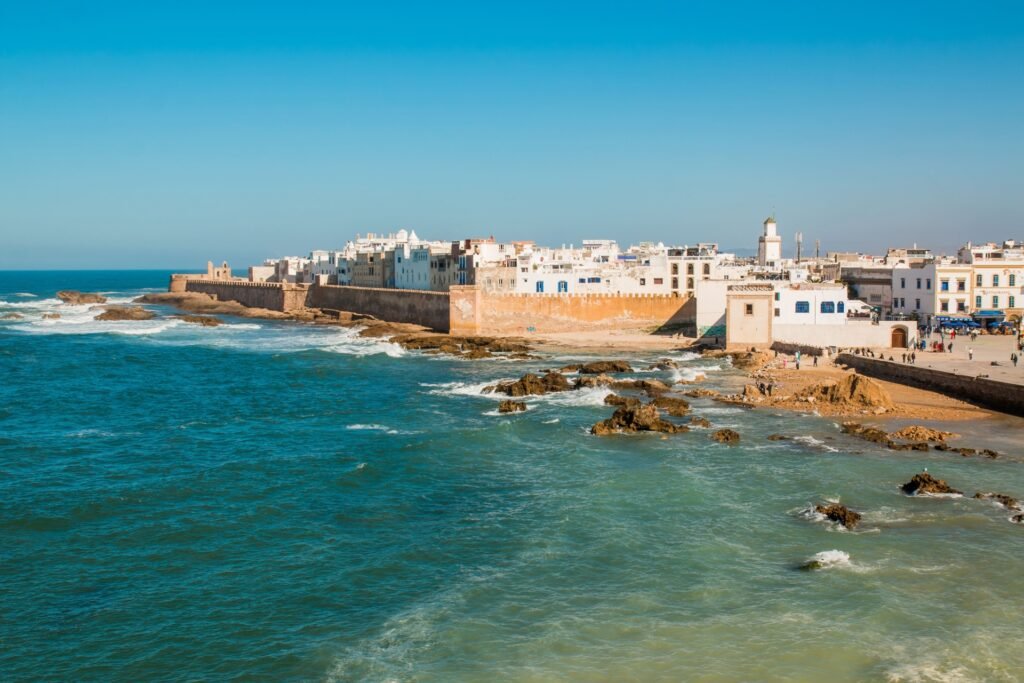
Essaouira is Morocco’s most established kitesurfing destination and for good reason. The city sits on a wide bay on the Atlantic coast, about three hours from Marrakech, and gets consistent wind from spring through autumn with summer being the most reliable window.
The wind in Essaouira is strong — sometimes very strong. Summer days regularly see 25-35 knots, which is excellent for experienced riders and challenging for complete beginners if the timing isn’t managed well. The better spots for learning are actually south of the city, away from the main beach, where there’s more space and the conditions tend to be cleaner.
The city itself is worth being in. The old medina is a UNESCO World Heritage site, the food scene is good, and the whole place has a relaxed coastal vibe that’s different from the intensity of Marrakech.
Dakhla
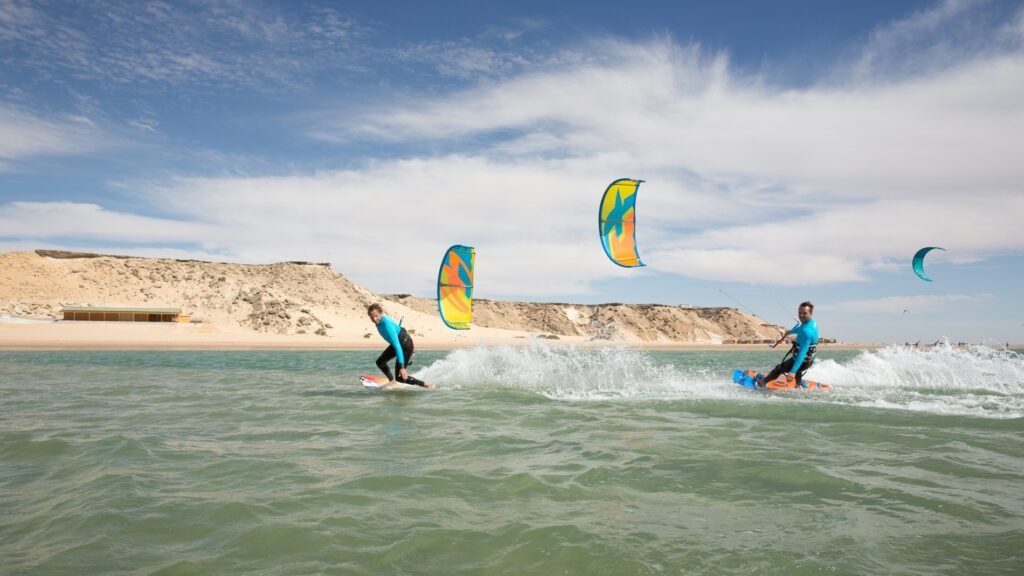
Dakhla is in the Western Sahara, about 1,500 kilometers south of Essaouira, and it’s where Morocco’s kitesurfing scene has grown the most aggressively in the last decade. The main draw is the lagoon — a huge, shallow, flat-water lagoon that’s almost perfectly designed for kitesurfing.
If flat water is a priority — for freestyle, foiling, or learning without the added variable of waves — Dakhla is the better choice. The wind is also very consistent, often stronger and more reliable than Essaouira.
The tradeoff is location. Getting to Dakhla requires a long drive or a flight, and the town itself is significantly less developed than Essaouira. There’s less to do outside of kiting, which is either ideal or a problem depending on who you’re traveling with.
Moulay Bousselham
Less known internationally, Moulay Bousselham is a lagoon spot north of Rabat that attracts mostly local Moroccan kiters and the occasional traveler who does their research properly. It’s not set up for tourism the way Essaouira and Dakhla are, but the conditions are solid and it’s far less crowded.
When to Go
The answer depends on what you’re going for.
For learning: Spring and early autumn are the sweet spot. Wind is consistent enough to get sessions in without being so strong that it becomes difficult to manage. April, May, September, and October all tend to offer good learning conditions.
For experienced riding: Summer. June through August is when the wind really shows up in Essaouira. 25+ knots is common. It’s not unusual to have sessions where you’re overpowered on a 9m. This is when the spot is at its most spectacular — and its most demanding.
For avoiding crowds: Outside of July and August, you’ll find the beaches much quieter. The French school holiday season drives a significant peak in visitor numbers, and the main spots can get busy during that window.
Winter: Wind is less consistent, temperatures drop (not dramatically, but noticeably), and some schools reduce their schedules. It’s possible to kite in winter and you’ll have spots mostly to yourself, but you need to be flexible about waiting for conditions.
What to Expect from Lessons in Morocco
The standard of instruction in Morocco varies more than it does in established European destinations. There are IKO certified schools with professional setups, and there are people with a kite and no qualifications offering cheap sessions on the beach. The difference matters enormously, especially for beginners.
IKO certification is the international standard for kitesurfing instruction. A certified school follows a structured progression system, uses proper safety protocols, and insures its instructors and students. It’s not a guarantee of a great experience, but it’s a baseline that eliminates a lot of risk.
What good instruction in Morocco looks like in practice: your instructor assesses conditions before deciding on a session, doesn’t put you in the water in unsuitable wind, and follows a clear progression from land kite control through body drag to water starts. The learning curve is real regardless of where you are — Morocco doesn’t make kitesurfing easier to learn, but good conditions and patient instruction make a significant difference.
Private lessons are worth the extra cost in Morocco specifically because communication and individual attention matter more in a spot with strong, variable conditions.
Practical Information
Planning a kitesurfing Morocco trip requires a bit of preparation — here’s what you need to know.
Getting there: Essaouira has a small regional airport with limited connections. Most people fly into Marrakech (3 hours by road) or Agadir (2.5 hours). Shared taxis and buses connect the cities, or you can hire a car which is probably the most convenient option for a kite trip.
Accommodation: Essaouira has a wide range of options from budget riads in the medina to guesthouses near the beach. Staying close to the beach or near the school you’re using saves a lot of back-and-forth. Some schools offer kitesurf and accommodation packages that simplify the logistics considerably.
Costs: Significantly lower than European destinations. A private lesson runs around €100-120 for two hours. Accommodation ranges from €30 for a basic room to €150+ for something more comfortable. Food in local restaurants is cheap — you can eat very well for €10-15.
Equipment: Most schools provide full equipment as part of the lesson price. If you’re an independent rider looking to rent, gear availability varies — Essaouira has a few rental options but it’s not as well stocked as Dakhla.
Language: French is the main second language after Arabic and Amazigh. Spanish is understood in some areas. English is spoken at most established schools and tourist-oriented businesses, but knowing a few words of French goes a long way outside of those environments.
Is Morocco Right for You?
Morocco makes most sense for:
Beginners who want good conditions, professional instruction, and a destination that offers more than just the beach. The cultural experience of being in Morocco while learning kitesurfing is genuinely different from a week in Tarifa or Fuerteventura.
Intermediate riders looking for consistent wave conditions and a less crowded environment than European spots. The Atlantic swell in Essaouira is real and rewarding once you have enough kite control to enjoy it.
Experienced riders chasing strong, reliable wind with miles of open beach and almost no crowds outside of the main spots.
Morocco is probably not the best fit for someone who needs guaranteed flat water, wants the infrastructure of a fully developed kite resort, or is uncomfortable with the slight unpredictability that comes with traveling somewhere less tourist-polished than Southern Europe.
Kitesurfing in Essaouira with Windy Essaouira
We run an IKO certified kitesurf and surf school in Essaouira, led by Mohamed Achhibat — Moroccan kitesurf champion and certified instructor. Lessons run year-round with private, semi-private, and group options for all levels.
We teach south of the city where conditions are better for learning and progression, and we schedule sessions around actual wind and ocean conditions rather than fixed timetables.
If you’re planning a trip to Essaouira and want to learn kitesurfing or take your riding to the next level, get in touch and we’ll help you figure out the right approach for your level and timeline.
Windy Essaouira — IKO certified kitesurf and surf school in Essaouira, Morocco.

 Spain
Spain  United Kingdom
  Germany
  Netherlands
  Belgium
  Switzerland
  Italy
Italy  Portugal
  Sweden
  Denmark
  Norway
  Finland
  Austria
  Poland
  Czech Republic
  Greece
  Ireland
  Luxembourg
  Russia
  UAE
UAE  Saudi Arabia
  Qatar
Qatar  Kuwait
  Bahrain
  Oman
Oman  Israel
  Turkey
  Jordan
  Lebanon
  Morocco
  Algeria
  Tunisia
  Egypt
Egypt  USA
USA  Canada
  Brazil
  Australia
  Japan
Japan  South Korea
  China
China  India
India