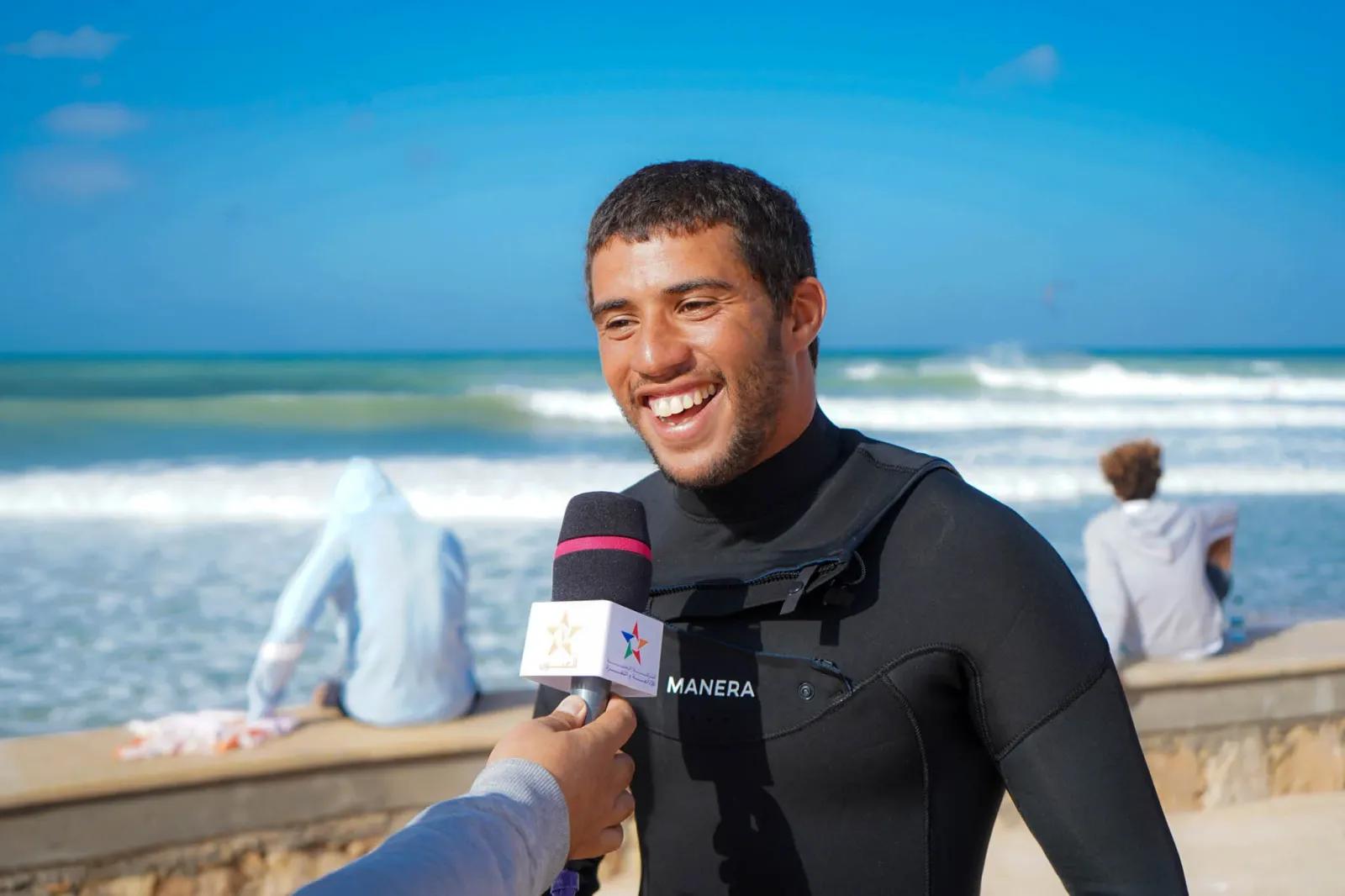
 Mohamed AchhibatNational Kitesurf Champion · IKO Instructor
Learning to surf in Essaouira means starting in a rare set-up: a west-facing bay that picks up Atlantic swell all year, a sand bottom with no rock or reef, and water shallow enough to stand in for dozens of metres. Here is what a first lesson actually looks like, how long it takes to stand up, and what it costs.
Why Essaouira is a good place to start
Essaouira's beach is a beach break — the bottom is sand. When you fall, and you will fall, you fall into water and onto sand. That is the single biggest difference between learning here and learning over reef.
The bay is huge and very shallow-angled. In the teaching zone you can stand a long way out, which changes everything as a beginner: you walk your board back instead of paddling, you recover between waves, and your instructor stays in the water right next to you.
One less obvious point: Essaouira is windy. The same wind that built its kitesurf reputation often chops the wave up in the afternoon. That is why surf lessons run in the morning, while the sea is still clean.
What a lesson actually looks like
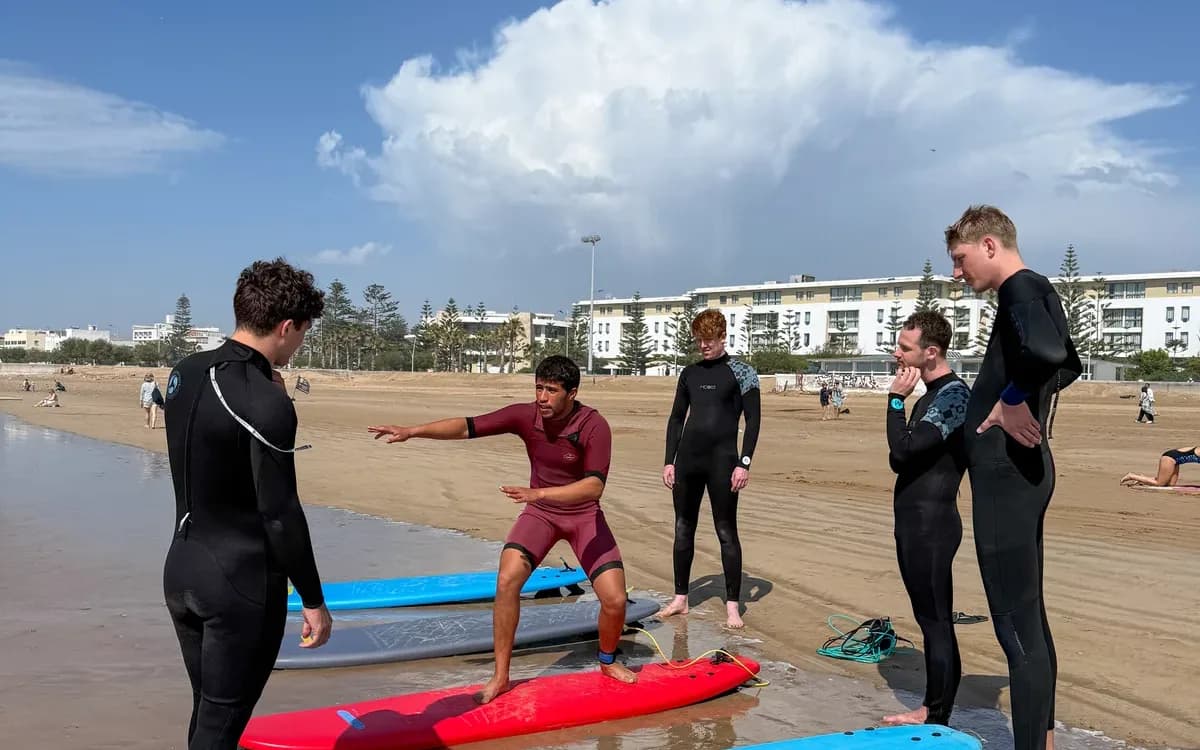
A lesson runs two full hours, and it does not start in the water.
- Warm-up and briefing on the sand: reading the beach, safety rules, and the pop-up rehearsed on a board laid on the ground.
- Getting in on the whitewater, where the wave has already broken. That is where you learn — not on the green face.
- First rides, lying down, then on your knees, then standing, with the instructor pushing the board at the right moment.
- The debrief, often the most useful part: what worked, what to fix next time.
Gear is included: a foam board sized to your height and weight, and a wetsuit. Nothing to buy, nothing to rent.
How long before you stand up
Everyone asks this. The honest answer: it depends on the day's wave and how comfortable you are in water. But the order of magnitude is consistent.
In summer, when the swell is small and regular, plenty of beginners get their first rides standing in that first two-hour session — on a foam board, in the whitewater, with the instructor pushing.
Surfing is another matter. Catching a wave yourself, reading it, positioning and going unassisted takes more like ten hours in the water, so five or six sessions. That is why the 6h and 8h packages exist: progress comes from repetition, not from one isolated lesson.

Which season to pick
Essaouira gets swell all year, so there is no dead season. But the seasons are not equal depending on your level.
| Period | Wave | Who for |
|---|---|---|
| October – March | The biggest swell of the year | Already-independent surfers |
| April – June | Medium wave, quiet beach | Beginners and intermediates |
| July – August | Small and soft | The best time to learn |
| September | Swell returns, water still warm | Intermediates |
Counter-intuitive but true: summer, written off as the weak season by experienced surfers, is the best window for a first lesson. A small wave means less power, more attempts, less fatigue.
Formats and prices
Prices per person, gear included.
| Format | 2h | 6h |
|---|---|---|
| Group lesson (min. 3) | €25 | €70 |
| Semi-private (2 people) | €35 | €100 |
| Private lesson | €45 | €130 |
Children's lessons run 1h30: €30 in a group, €40 private, from age 5. We wrote a dedicated guide on ages and how a kids' lesson runs: surf and kitesurf as a family in Essaouira.
The maths tips quickly towards the longer formats: six hours in a group works out under €12 an hour against €12.50 for two — and it is the format where progress actually becomes visible.
Where you'll surf
Most beginner lessons happen on Essaouira's town beach, the safest and most accessible stretch. Once you're independent, the surrounding spots open up.
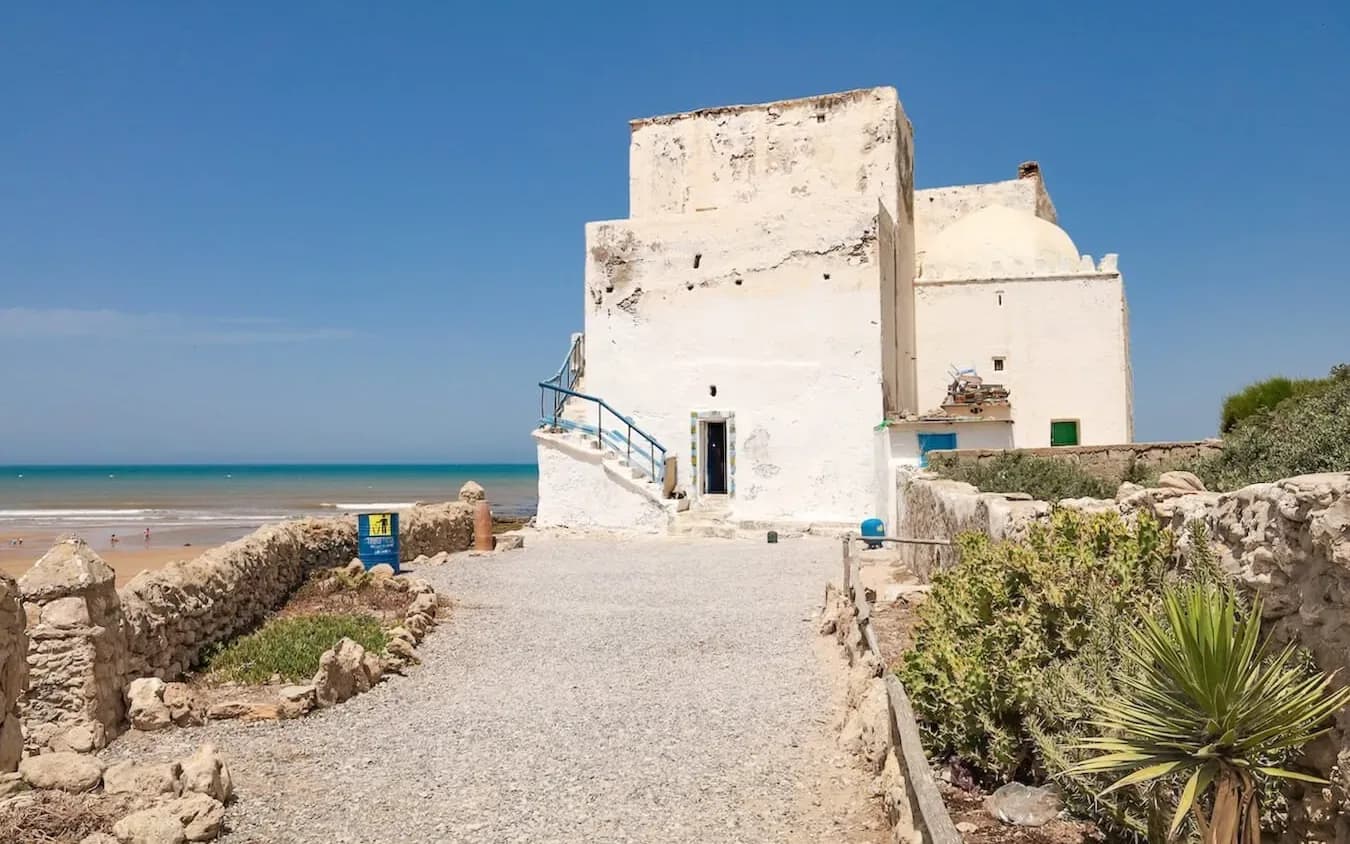
- Sidi Kaouki, 25 minutes south: more wave, fewer people. Guided trip at €55 per person.
- Cap Sim: a left for surfers already at ease.
- Imsouane, further south: the longest right in Morocco, a day trip at €90 (€80 from 3 people).
We break down each spot, its swell and its level in the guide to surf spots around Essaouira.
What to bring
Almost nothing: swimwear, a towel, water-resistant sunscreen. Board and wetsuit are provided. Bring something to drink — two hours in the Atlantic dehydrates you more than you'd think — and skip the heavy breakfast right before.
How to choose a school
Three things to check, in Essaouira as anywhere:
- Students per instructor. Past four or five, the instructor can't push everyone and you spend the session waiting.
- The gear. A correctly sized foam board changes everything for a beginner. Too short, and you'll spend the hour paddling.
- The time slot offered. A school selling you a session in the windy mid-afternoon isn't reading the conditions.
Booking
Surf lessons in Essaouira can be booked online, from the two-hour taster to the eight-hour package. Still torn between the two sports? We compared them honestly in kitesurf or surf in Essaouira.